รายการของคุณว่างเปล่า
เพิ่มสินค้าเพื่อขอใบเสนอราคา

Trustworthy laboratory measurements originate well before an experiment makes it to the analysis phase. The most optimal research design may fail when cells are contaminated, lose viability, or act in a different manner due to a lack of consistency in laboratory procedures. This is the reason why it is necessary that students, researchers, and laboratory workers in the life sciences learn how to master tissue culture.
Concurrently, tissue culture is now more significant than ever. Regenerative medicine, cancer biology, vaccine development, and drug discovery all rely on well-preserved cell and tissue models. Nonetheless, healthy cultures cannot be sustained by simply adhering to a protocol. It requires appropriate methods, media, certified cell lines, and aseptic procedures.
As an example, a 2023 protocol published in JoVE emphasizes that contamination, especially by bacteria, fungi, and mycoplasma, is one of the most limiting factors in research labs, and consistent use of aseptic technique is an essential component of effective cell culture procedures.
This article explains tissue culture, its major techniques, different culture types, and its growing applications in modern research.
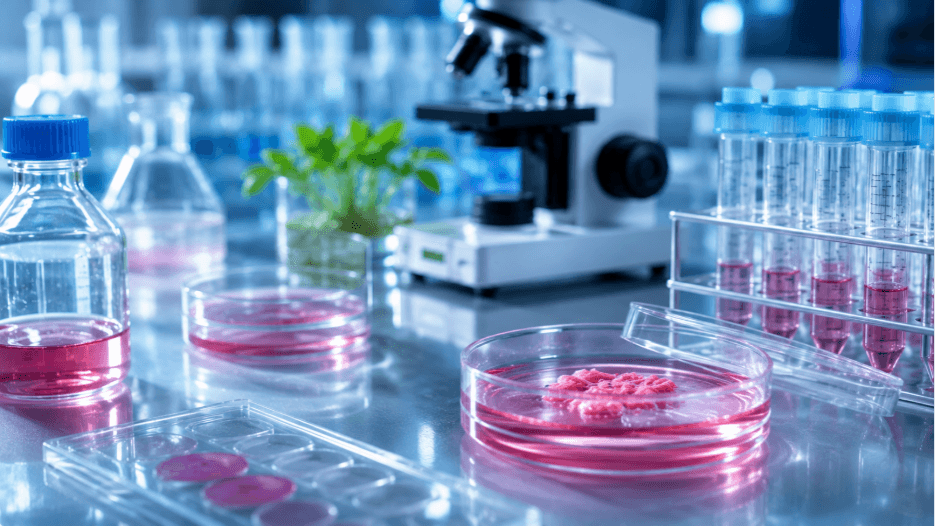
Tissue culture refers to the cultivation of living cells or tissues, including small organs, in a controlled laboratory condition that is not in their natural habitat. To maintain healthy cell growth and operation, researchers provide optimal conditions, including nutrients, growth factors, and controlled temperature, humidity, and carbon dioxide concentrations.
Today, tissue culture is a cornerstone of biomedical research. It is applied by scientists to understand disease mechanisms, evaluate drug safety, comprehend gene function, create vaccines, and support regenerative medicine.
Although cell culture involves explicit cultivation of isolated cells, tissue culture is the larger discipline that encompasses cultured tissues and specialized biological models as well.
As high-quality results require healthy and authentic cells, laboratories focus on the high quality of culture materials provided by reliable suppliers.
For example, XL Biotec offers a comprehensive range of tissue culture products, including Panexin Basic, Serum Replacement with Defined Components, and Human Serum, Sterile Filtered to support diverse research workflows. It also has popular cell line products in its catalog, including HEK293, A549, and HT-29, which researchers can rely upon in their in vitro models of multiple biological processes.
Consistency is the key to successful tissue culture. Even minor procedural mistakes can influence cell growth, distort the results of the experiment, or cause contamination. Thus, researchers use various standardized methods across all cycles of culture.
The basis of every successful cell culture protocol is the use of aseptic technique.
Its main goal is straightforward: avoid the entry of microorganisms into the culture and safeguard researchers and laboratory equipment.
Aseptic standard practices consist of:
These measures significantly decrease bacteria, fungi, and mycoplasma contamination.
Additionally, OECD Good In Vitro Method Practices (GIVIMP) recommends the use of specific workflows in the laboratory, quarantine of novel cell lines, and periodic screening of cultures to ensure data integrity and reproducibility.
Tissue culture media should be carefully balanced to include nutrients, amino acids, vitamins, salts, glucose, buffering agents, and growth supplements in healthy cells.
Despite the different formulations based on the cell type, media typically provide:
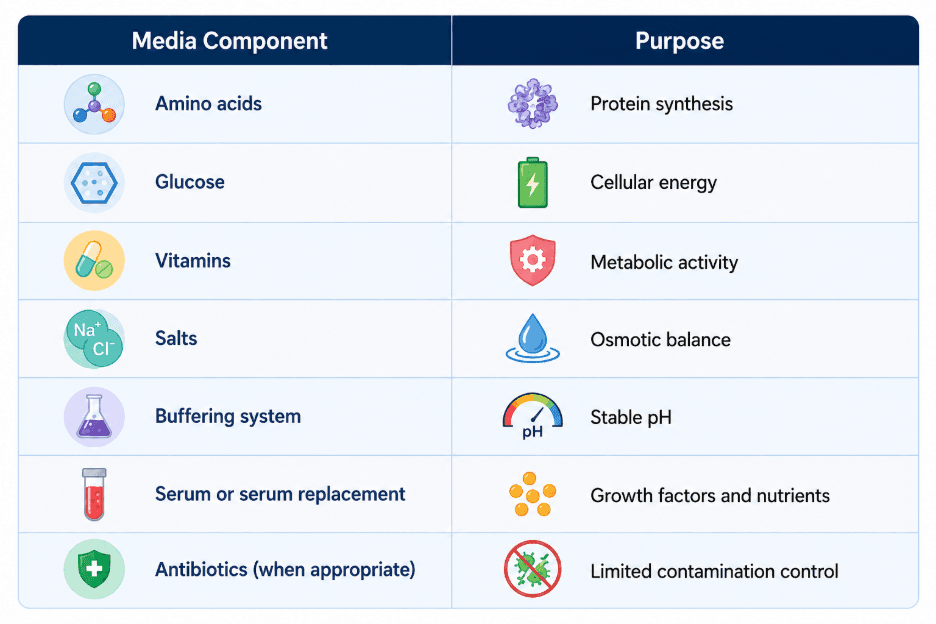
Serum is also one of the most essential constituents as it provides hormones, proteins, attachment factors, and growth-promoting molecules.
Researchers can rely on products like Human Serum, sterile Filed or Serum substitutes like Panexin Basic or Serum Replacement with Defined Components to support cell growth and still achieve higher experimental consistency depending on the needs of the experiment.
Notably, the OECD guidelines highlight that antibiotics must never substitute for good aseptic measures since they are incapable of eradicating all sources of contamination.
After the media preparation is done, cells are transferred to sterile culture vessels at a densely calculated number.
Seeding less causes slowed growth, whereas overcrowding causes limitation in nutrient availability and cellular behavior.
With inverted microscopes, researchers often monitor cultures with a focus on:
Regular observation assists researchers in identifying issues that might have impacts on experimental outcomes.
Cells cannot be left in the same culture vessel forever.
As the population grows, the stock of nutrients is drained and the amount of metabolic waste increases. As a result, scientists conduct subculturing, also known as passaging, in order to transfer a fraction of the cells to new culture vessels with new media.
Proper passaging offers several advantages:
Nonetheless, over passaging can have an insidious effect on changing cellular properties. That is why in most laboratories the passage numbers are carefully recorded during all experiments.
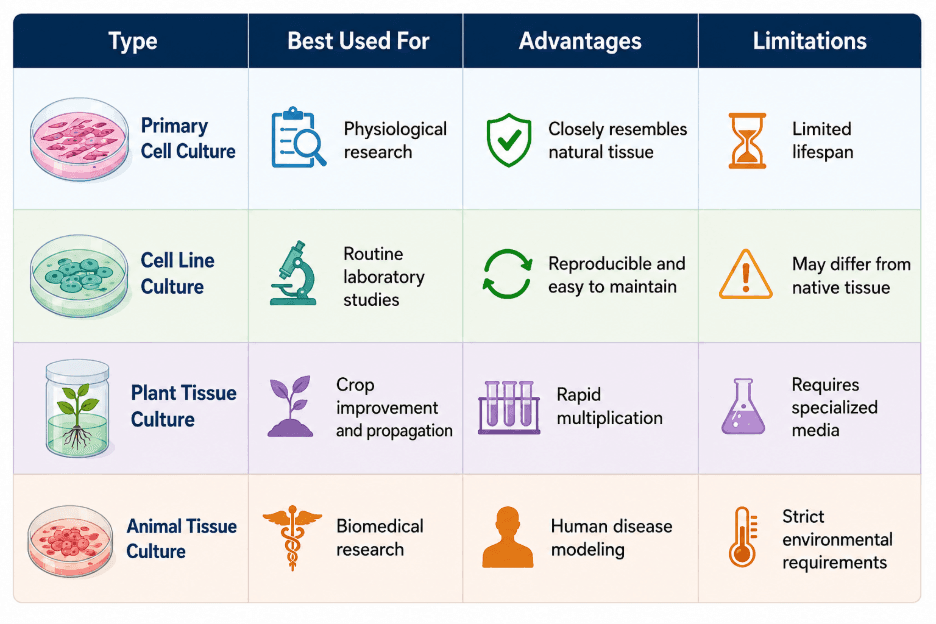
Tissue culture is needed in different forms depending on the research objectives. Some experiments require freshly isolated cells, which are highly similar to living tissue, whereas others take advantage of established cell lines, which are more consistent and are easier to maintain. Being aware of these distinctions assists researchers in selecting the most appropriate culture model to use in their research.
Primary cell culture is created by isolating cells directly from living tissues. These cells are highly utilized in cases where physiological relevance is required since they are very similar to their natural counterparts.
Researchers commonly use primary cultures to study:
Nevertheless, the primary cultures can be short-lived. They typically divide only a certain number of times before entering senescence, making them more challenging to maintain than immortalized cell lines.
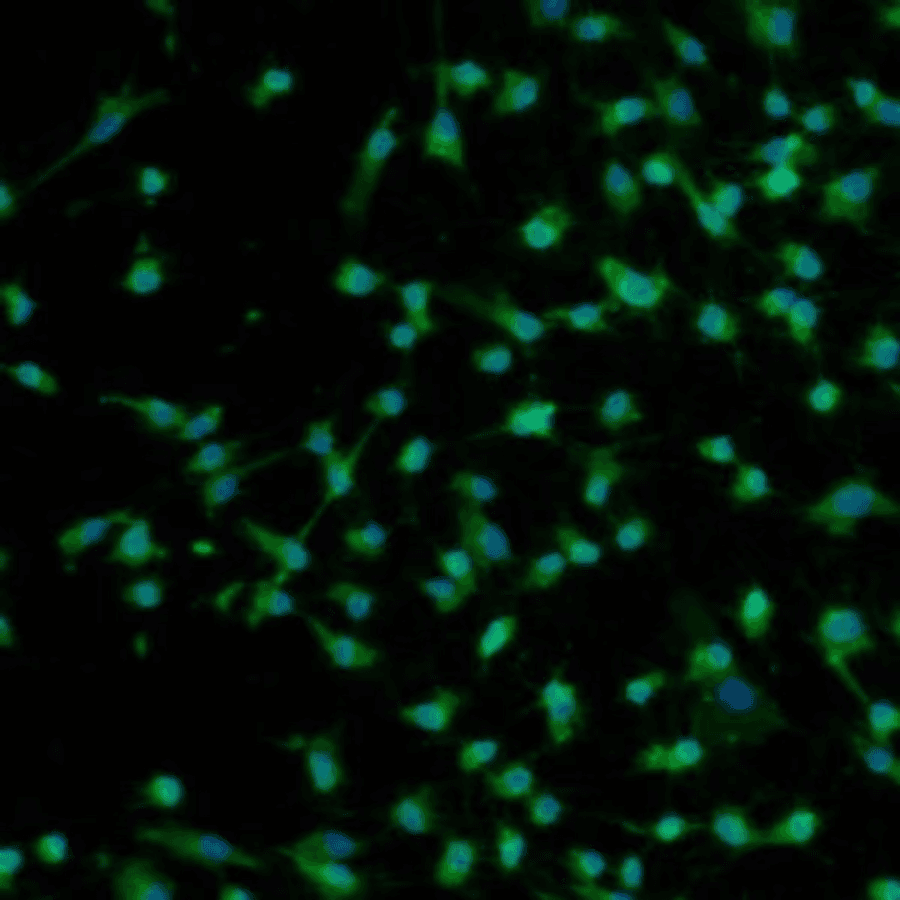
In the case of laboratories conducting research on normal tissue biology, products like Normal Human Dermal Fibroblasts - Adult, Primary offer useful research models.
In contrast to primary cultures, cell line culture comprises cells that go on to divide into numerous generations under favorable conditions in the laboratory.
Cell lines are favored by researchers since they provide:
The use of authenticated cell lines enhances the reproducibility of research considerably and decreases variability among experiments.
Plant tissue culture is the cultivation of plant cells, tissues, or organs in sterile laboratory environments with special nutrient media.
This technique supports:
In contrast to animal cells, some plant cells do not lose the capacity to develop into fully grown plants in a process referred to as totipotency.
Plant tissue culture has also gained a lot of significance in agriculture since it allows propagation throughout the year regardless of the time of the year.
Animal tissue culture concerns the preservation of animal or human cell cultures to use in laboratory studies.
Applications include:
Animal cells typically need a more stringent environmental control, such as temperature, carbon dioxide concentration, humidity, and nutrient composition, compared to plant cultures.
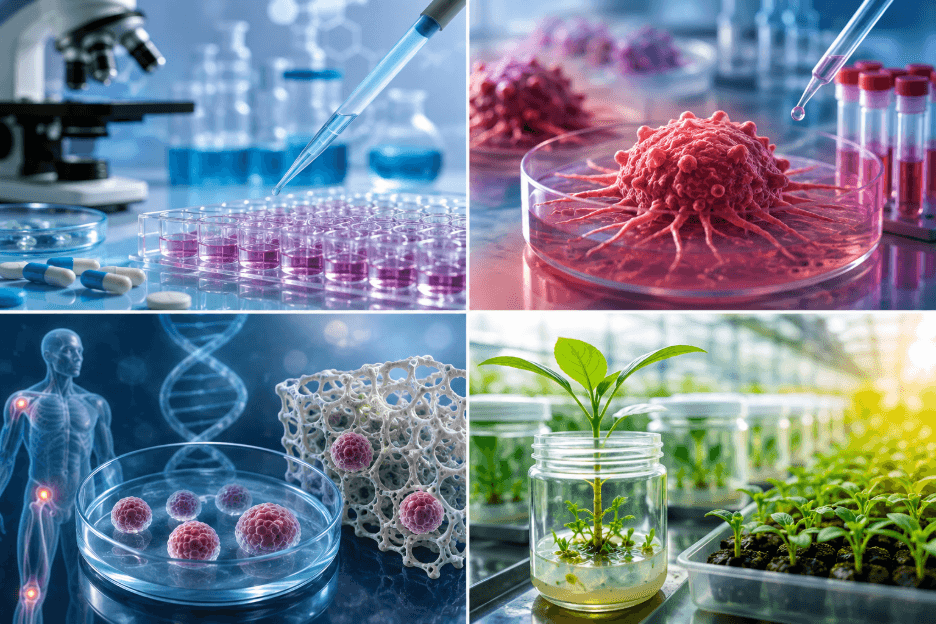
Modern tissue culture applications extend far beyond academic laboratories. They are now supporting discoveries in the fields of healthcare, agriculture, pharmaceuticals, and biotechnology.
Before proceeding to animal tests or clinical trials, researchers test thousands of drug candidates in cultured cells.
This method helps to discover:
MCF-7, A549,and HepG2 cancer cell lines provide scientists the ability to study tumor biology, genetic mutations, and treatment responses.
These standard cell models are used to speed up oncology research and enhance the reproducibility of experiments.
Tissue culture methods have been essential in stem cell research to determine tissue repair and regenerative therapies.
Scientists are still experimenting with cultured cells in areas that include:
By using plant tissue culture, scientists are able to obtain disease-free crops without loss of beneficial plant varieties.
Applications include:
The contemporary culture of tissue culture is still influencing scientific discovery, with the use of sound models to study biology, design medicines, regenerative therapy, and agricultural innovation. But effective results are not limited to technical expertise. Regular aseptic standards, culture media, validated cell line culture paradigms, well-chosen sera, and standardized lab procedures all play roles in ensuring precise and reproducible outcomes.
Regardless of whether you are setting up a primary cell culture, keeping existing cell lines, or investigating advanced tissue engineering, selecting reliable laboratory materials can have a quantifiable impact on the quality of research.
At XL Biotec, we are committed to supporting researchers with high-quality tissue culture solutions, including premium sera, authenticated cell lines, and specialized laboratory products designed for modern life science research.
Explore our tissue culture portfolio today to find reliable products that help your laboratory achieve consistent, reproducible results.
Tissue culture is the science of culturing cells or tissues in vitro under sterile laboratory conditions using nutrient-rich media, at a controlled temperature, and under appropriate environmental conditions.
Some of the major methods are primary cell culture, cell line culture, plant tissue culture, animal tissue culture, monolayer culture, suspension culture, and three-dimensional culture systems.
Primary cultures are direct cultures of living tissues and closely resemble natural biology, but have a short life. Cell lines that have been established reproduce indefinitely and offer more consistency to routine research.
Monolayer cultures cultivate on flat surfaces, suspension cultures cultivate freely in liquid media, and 3D cultures recapitulate tissue-like structures that are more physiologically relevant to the in vivo environment.
Aseptic technique avoids bacterial, fungal, and mycoplasma contamination, preserving cell viability and yielding reliable experimental outcomes.
Common requirements are tissue culture media, serum or serum replacements, amino acids, vitamins, buffering agents, antibiotics when necessary, and special supplements based on the type of cell.
Subculturing replaces growing cells in new media in fresh culture vessels to avoid overcrowding, which causes unhealthy growth and experimental variability.
The frozen cells are stored at extremely low temperatures in controlled conditions in the presence of cryoprotective media so that researchers can retrieve viable cultures in future experiments.
Its applications are in drug discovery, vaccine manufacturing, cancer research, regenerative medicine, testing in toxicology, agricultural biotechnology, and fundamental biological research.
Poor aseptic technique, contaminated reagents, unsterile equipment, or infected cell lines are typically the causes of contamination. These risks can be greatly avoided by working in sterile settings, regularly testing cultures, and adhering to standardized laboratory procedures.
