รายการของคุณว่างเปล่า
เพิ่มสินค้าเพื่อขอใบเสนอราคา

Key Takeaways:
Tissue culture evolved from the ingenious discovery that single plant cells could develop into entirely new, living crops if properly instructed under certain conditions.
After placing isolated plant cells in a nutrient-rich cell culture media in 1902, German botanist Gottlieb Haberlandt observed marked cell division.
Haberlandt’s cells did not produce new plants. However, his discovery sparked immense interest in tissue culture within the global botanical research community.
In 1907, American zoologist Ross G. Harrison corroborated Haberlandt’s findings by growing frog nerve cells artificially using clotted lymph. A research team led by French surgeon Alexis Carrel later improved upon previous tissue culturing techniques, eventually coining the term “tissue culture.”
Tissue culture involves both plant and animal models. However, many scientists have shifted their attention to plant cells, with the technology presenting a viable solution to global food insecurity.
Tissue culture is presently the most effective way to produce fast-growing, disease-free crops at scale. Read on for more insights into this technology.
Table of Contents:
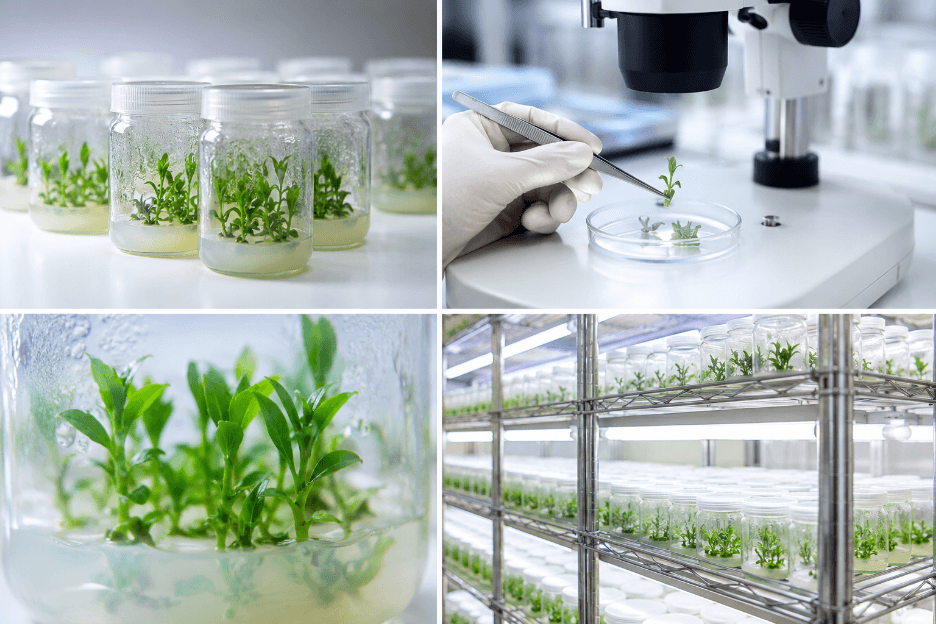
Tissue culture is a biological technique whereby plant or animal cells, tissues, or organs are propagated in a sterile and highly controlled nutrient-rich media. The organic fragments thrive in special chemical solutions called cell culture media.
If adequately nourished, organic cells can eventually grow into larger tissues or (for plant specimens) entirely new crops.
Tissue culture relies on totipotency. Discovered over a century ago, the technique evolved from being a mere scientific fascination to becoming a global focus in mass crop production.
As noted, tissue culture targets plant and animal cells alike. Both techniques share fundamental similarities, including;
However, plant and animal cultures differ in the final outcome and common use cases.
Plant tissue cultures typically focus on regenerating entirely new, disease-free plantlets for mass crop propagation. Animal tissues don’t produce new organisms.
That said, mammalian cell culture has driven numerous groundbreaking pharmacological discoveries. By closely observing animal cells over sterile media, researchers can monitor disease behaviors and model the outcomes in developing effective drugs and vaccines.
Mass propagation is undoubtedly the biggest application of tissue culture. Using a single primary cell culture, growers can produce millions of genetically homogeneous crops with minimal resources. Commonly cultured plants include;
Because tissue culture supports regeneration of whole plants at scale, the technology has become central to addressing global food insecurity.
More fascinating is that tissue culture happens entirely in laboratories. Therefore, crop growers can mass-produce new plantlets quickly and safely without investing in massive agricultural lands or worrying about extreme climatic conditions.
Other common tissue culture applications include;
Tissue culture is central to drug screening. By testing new medications on cultured media, scientists can assess the drugs’ efficacy and toxicity before administering them to real people.
As cell proliferation is the foundation of tissue culture, numerous oncological research centers rely on the technique to study carcinogenic cell behaviors.
Certain laboratories grow cells to cultivate viruses with a view to developing new vaccines. The vaccines are subsequently tried on low-risk cultured media before being approved for mass usage.
Examples of human vaccines produced in tissue culture include;
Two different species may not breed naturally. By propagating their respective tissues, researchers can create genetically modified organisms (GMOs) for crop production or targeted genetic studies.
A classic case is the pomato - a single plant whose roots produce potatoes and flowers grow into tomatoes.
Tissue culture hybrids are disease-free. Resultant crops are also super-resilient against environmental stressors like drought, making them the growers’ favorite.
Certain plants are extremely rare in nature. Without concerted conservation efforts, these species may soon go extinct.
Because tissue culture can regenerate millions of whole plants from small samples without harming the parent organism, it helps preserve endangered species.
Stages of Tissue Culture
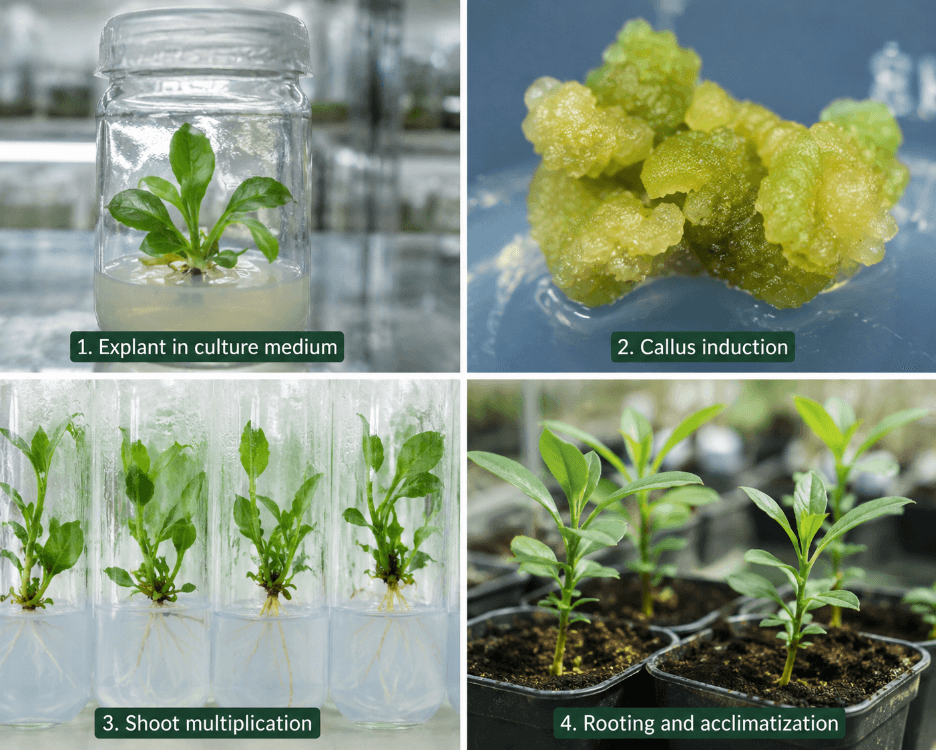
Both plant and animal tissue culturing begin by obtaining healthy extracts of the parent organism’s cells, tissues, or organs. In plants, these tissues are called explants.
The process would then unfold as follows;
Culturists utilize specific high-alcohol chemicals to rid the specimen of pathogens like bacteria, viruses, and fungi. For ongoing cell line maintenance, there's a need to sterilize the setup periodically.
During inoculation, the sterile tissues are added to a nutrient-rich media. Most tissue cultures utilize an agar gel enriched with essential growth minerals, vitamins, and hormones.
The media is placed in a highly controlled environment to stimulate cell division. While the conditions may vary by species, aim for;
Under the ideal conditions, the plant or mammalian cell culture divides rapidly into an awkward mass called callus.
Culturists alter the hormone ratio in the media, triggering the callus to develop distinct roots and shoots.
Consistent screening helps track the culture for developmental issues, such as disproportionate growth and pathogen contamination. You could use an ELISA kit to quantify the specific antigens in the dividing cells and assess their potential disease resilience.
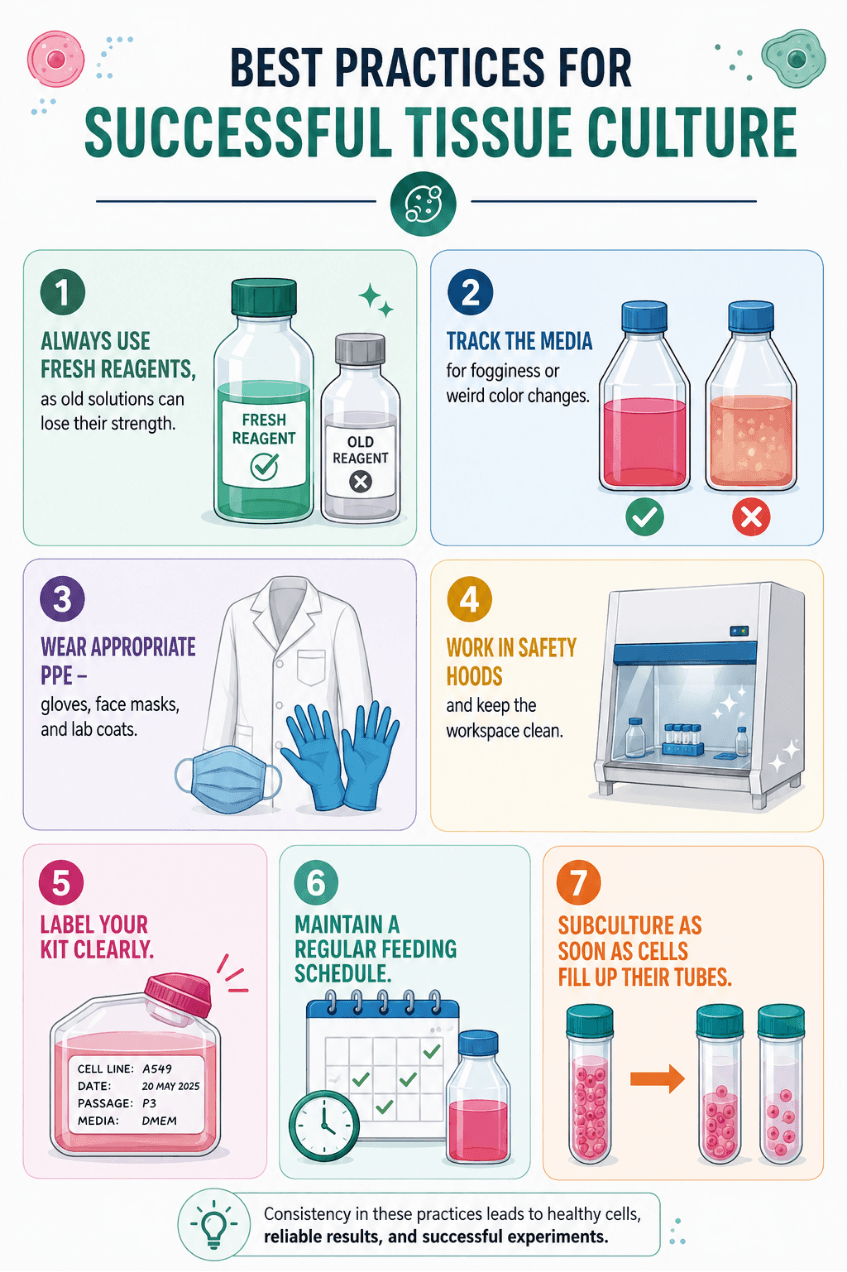
Here are some best practices to improve the outcome of your tissue culture;
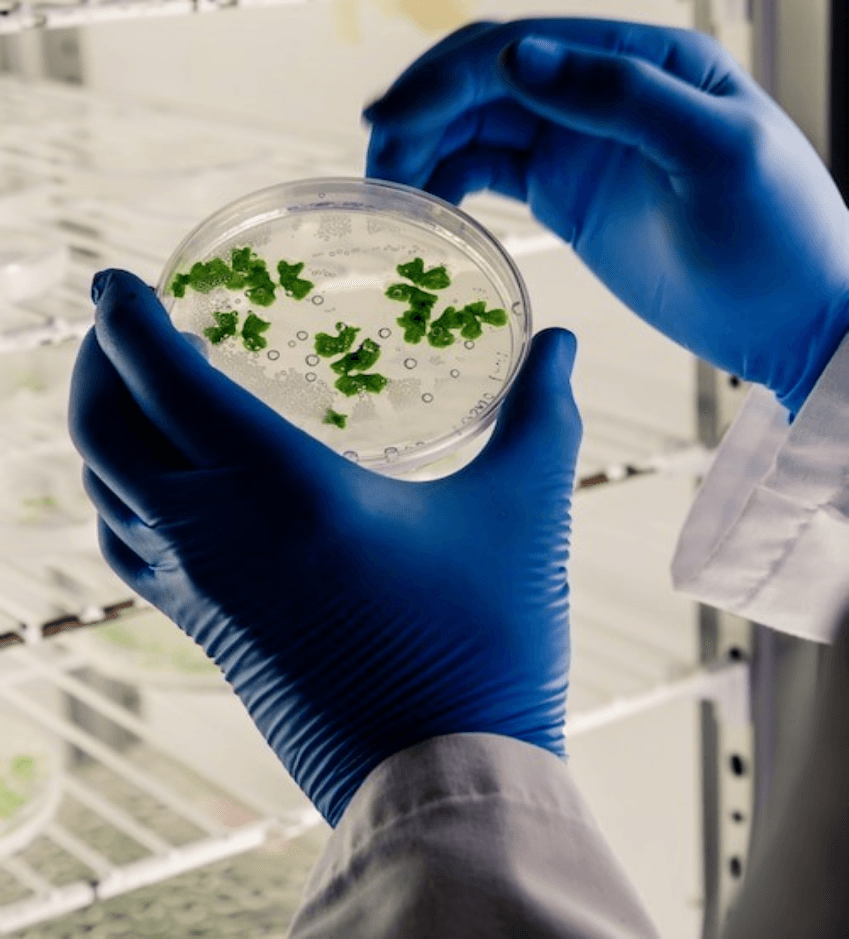
While numerous plant tissue culture techniques have emerged over the years, callus culture remains the most popular. It involves placing an explant on a nutrient-rich media to produce a callus, and then altering the hormone composition to stimulate shoot and root development.
Micropropagation is another common tissue culture method. Also called shoot culture, micropropagation involves obtaining small stem nodes and culturing them to stimulate shoot formation.
Benefits include;
Other tissue culture techniques include;
In cell suspension culture, culturists transfer explants or well-developed calluses to a liquid medium. They then place the mixture on an orbital shaker to break the tissue mass into multiple distinct cells.
This sterile tissue culture technique is widely used in the large-scale production of legume crops, dyes, and drugs.
Meristem cultures utilize a plant’s apical or axillary meristem.
Since meristems lack vascular bundles, they’re exceptionally low in viruses. This allows culturists to avoid cell culture contamination and yield disease-free plants.
Consider embryo culture if you want to bypass embryo dormancy or improve the viability of tissues derived from incompatible parents.
Besides incredible success rates with plants, this technique may also support in vitro fertilization (IVF) in animals.
How Should I Choose The Best Tissue Culture Media?
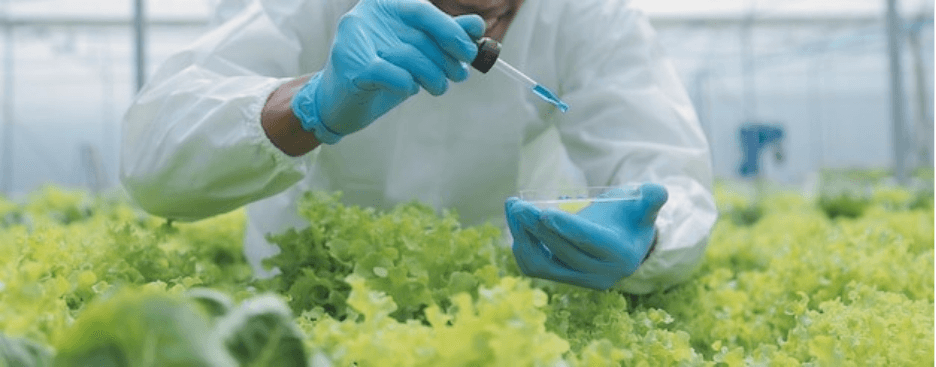
Tissue culture media is an artificial, nutrient-rich solution or gel where you grow your cells, tissues, or organs. It provides a consistent supply of essential minerals, vitamins, and hormones.
When choosing tissue culture supplies, consider the target organism. Different organisms require specific nutritional needs to thrive.
Your ultimate goal also determines the suitability of tissue culture media. Sample premium categories: tissue culture and pick products designed exclusively for calluses or whole plant organs.
Moreover, consider a tissue culture’s physical state. While liquid-based solutions offer uniform growth, gel-like agar provides the cells with structural support.
Other essential factors include;
Choosing the right cell culture media is the most critical step in tissue culturing.
While suppliers abound, XL Biotec stands out for its uncompromising insistence on industry-mandated testing. The company partners with leading tissue culture brands, ensuring genetic purity and consistency.
With XL Biotec, you get professionally authenticated and contaminant-free cells. This minimizes inventory contamination, providing long-term cost savings.
Ready access to premium supplements is another thing that sets XL Biotec apart. From Fetal Bovine Serum (FBS) and pluripotency media, the choice depends on your research program.
Contact XL Biotec today to order duly authenticated cell culture media, cell lines, and biomedical diagnostic kits.
Tissue culture refers to the systematic propagation of organic cells, tissues, or organs in sterile, nutrient-rich media. It’s a foundational technique used in mass-producing genetically homogeneous crops as well as disease research, vaccine development, and new drug testing.
A tissue culture lab requires the following essential tools:
Primary cell cultures derive directly from a plant or animal tissue and often have a shorter shelf life, while established cell lines are genetically altered in laboratories to ensure indefinite growth.
To prevent microbial contamination in cell culture media;
Serums like FBS serve as supplements, providing essential nutrients for sustained cellular development. They’re typically loaded with growth factors like proteins and vitamins.
Replace tissue culture media when you notice distinct color changes, which suggest that cells have consumed all the nutrients. That typically happens every 2 - 3 days.
Adherent cell cultures bind to the bottom of a tissue culture flask to grow, while suspension cultures float over the media.
To passage adherent cells, remove the old liquid media and use a buffer solution like PBS to wash the cells. Next, add a suitable enzyme like Trypsin to dislodge the cells from the bottom of the flask. Administer fresh media to stop the enzyme before transferring a portion of the cell mixture to a new tube.
Mycoplasma contamination occurs when mycoplasma, a microscopic bacterium with no cell wall, enters your cell media. You can detect the bacteria by screening your cultures rigorously every 2 or 3 months using polymerase chain reaction (PCR) tests. To prevent mycoplasma contamination, implement proper sterilization techniques.
Most tissue culture problems can be resolved by identifying the cause early. If the media changes color quickly, add fresh nutrients and check for contamination. Foggy media usually indicates contamination and should be discarded, followed by proper sterilization. If cells do not stick, coat the culture surface before seeding. When cells grow too fast, adjust the incubator to the recommended temperature and gas levels to maintain healthy growth.
