รายการของคุณว่างเปล่า
เพิ่มสินค้าเพื่อขอใบเสนอราคา

Introduction Interleukin-30 (IL-30) and its related cytokines form a fascinating frontier in immunology, offering new perspectives on immune regulation and therapeutic possibilities. In this blog post, we delve into the emerging roles of IL-30 and its implications in immune modulation and disease pathways.
Understanding Interleukin-30 (IL-30) IL-30 belongs to the IL-27 cytokine family and plays a pivotal role in modulating immune responses. It acts in concert with other cytokines to fine-tune immune reactions, impacting both innate and adaptive immunity.
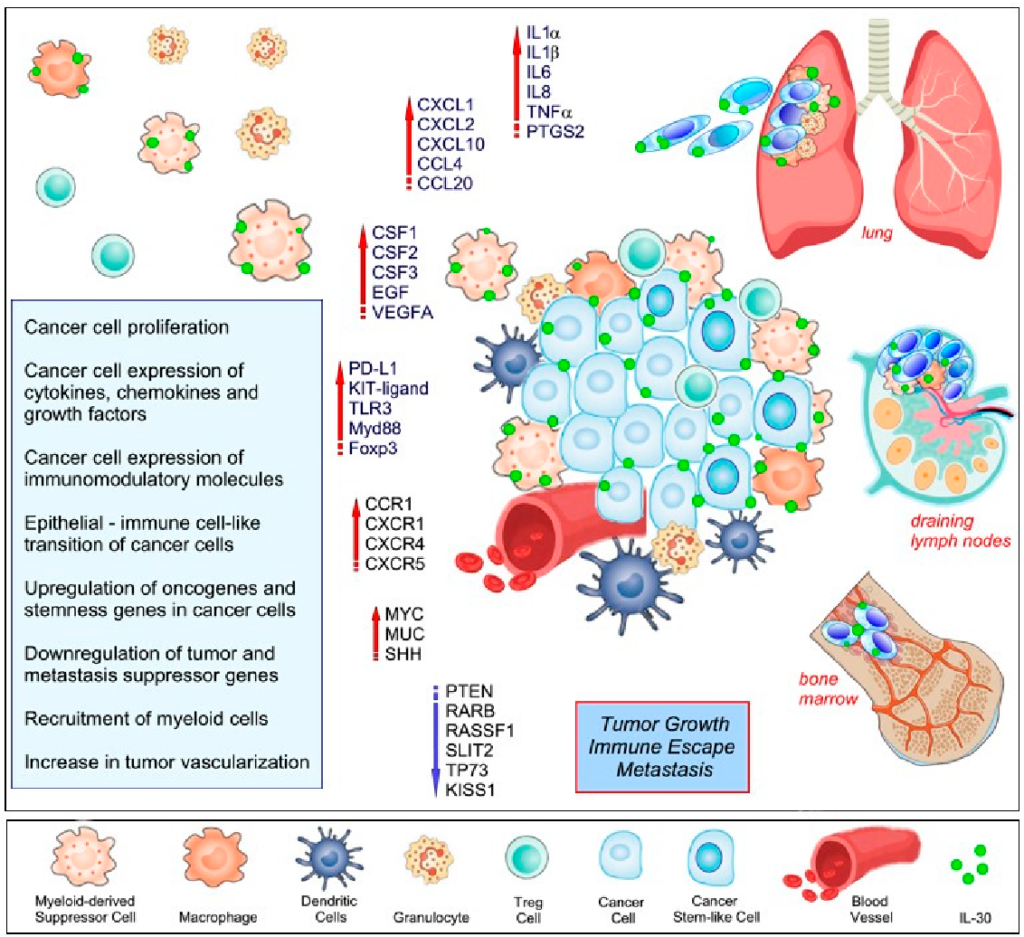Effects of IL-30 expression by cancer and myeloid cells in the tumor microenvironment. On the left side, the effects of IL-30 on cancer cells and on the composition of immune cells infiltrating the tumor are listed. On the right side, the effects of IL-30 on tumor behavior are represented.
Decoding the Role of Interleukin-30 in the Crosstalk between Cancer and Myeloid Cells
Diverse Functions of IL-30
Significance of IL-30 in Health and Disease
Therapeutic Potential and Research Advances Researchers are exploring IL-30 as a therapeutic target for immune-related disorders and cancer, investigating strategies such as IL-30 blockade, receptor modulation, and combination therapies to harness its immunomodulatory effects.
Future Directions and Clinical Implications Ongoing studies aim to elucidate the intricate mechanisms of IL-30 signaling, its interactions with other immune mediators, and its role in specific disease contexts. Insights from research hold promise for advancing personalized medicine and developing targeted immunotherapies.
Conclusion Interleukin-30 (IL-30) emerges as a key player in immune regulation, inflammation, and potential therapeutic interventions across various disease spectrums. Unraveling the complexities of IL-30 signaling opens new avenues for precision medicine and innovative immunotherapeutic approaches.
