รายการของคุณว่างเปล่า
เพิ่มสินค้าเพื่อขอใบเสนอราคา

The dance of life and death within our cells, often referred to as apoptosis, is beautifully intricate. In apoptosis research, tools like Annexin and 7-AAD stand out due to their ability to provide crucial insights into this cellular process. Let’s demystify the world of apoptosis and understand how Annexin and 7-AAD play their roles.
Apoptosis is essentially programmed cell death, a self-destruct sequence that cells undergo. This isn’t a random event but rather a necessary process to maintain balance and health within organisms. It eliminates harmful, aged, or unnecessary cells, paving the way for new ones.
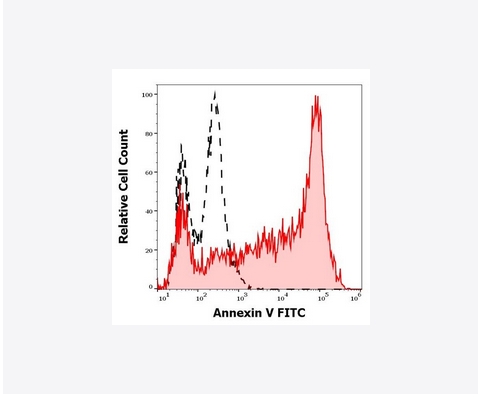
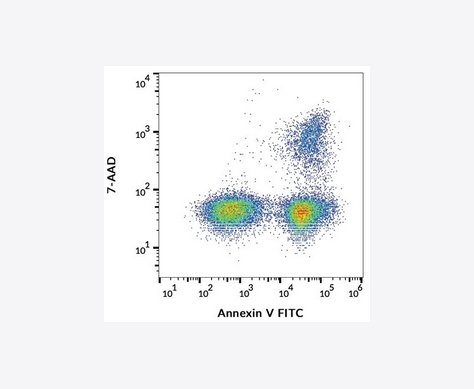
!Flow cytometry histogram of Annexin Fitc staining!4 Quadrant plot of cells expressing 7-AAD and Annexin
## Enter [Annexin](https://www.exbio.cz/search?searchtext=annexin) and [7-AAD](https://www.xlbiotec.com/product/7-aad-viability-staining-solution/)
In the realm of apoptosis research, knowing which cells are alive, which are in the process of dying, and which have already died is crucial. This is where Annexin and 7-AAD come in.
Annexin V:
This protein has a high affinity for phosphatidylserine, a molecule that gets flipped from the inside to the outside of the cell membrane during early apoptosis. By binding to this molecule, Annexin V acts as a marker for cells that are in the early stages of apoptosis.
7-AAD (7-Aminoactinomycin D):
7-AAD is a dye that binds to DNA. Importantly, it can only access the DNA of cells that have compromised cell membranes – a characteristic of late-stage apoptosis or necrosis. Thus, 7-AAD is great for identifying cells that are at the end of the apoptosis process or already dead.
## Using Annexin and 7-AAD Together
Benefits of Dual Staining:
Apoptosis is a complex dance, but with tools like Annexin and 7-AAD, scientists can gain clearer insights into the intricacies of cell death. By understanding and monitoring apoptosis, we’re better equipped to tackle diseases, understand development, and promote overall organism health.