Your list is empty
Add products to request a quote

A tissue culture laboratory is a more complex endeavor than simply obtaining a CO2 incubator, biosafety cabinet, and a few culture flasks. The real challenge is making sure every component works together to support healthy cell growth.
A suitable basal medium, the right serum concentration, vitamins, and dissociation reagents can all affect how cells respond during your experiment. Even a minor error, such as choosing a medium that does not match the cell line, can impact the viability of your cells and the research.
For researchers establishing a new lab, knowing what to buy, what each reagent does, and which quality standards to check can save researchers time and money. This checklist breaks down the basic tissue culture equipment and supplies, how to choose media and supplements, and the quality checks that help ensure consistent cell cultures.
1. Quick Checklist
2. Core Equipment
3. Basal Media: DMEM vs RPMI 1640 vs MEM
4. Sera & Supplements
5. Dissociation & Passaging Reagent
6. Antibiotics & Antimycotics
7. Viability & Quality Control
8. Buying Tips: lot testing, cold chain, CoA, lead times in Thailand
9. Tick off the Final Checklist before Your First Culture
10. FAQs
A basic tissue culture lab needs a Class II biosafety cabinet, a CO2 incubator, a centrifuge, an inverted microscope, and a water bath. Aside from plastics, you also need basal medium, serum, trypsin, buffered saline, antibiotics, and a viability stain.
The table below categorizes the equipment, consumables, and reagents to be purchased together. PAN Biotech, CLS, and Sigma products are available in Thailand through XL Biotec, and the full set of tissue culture products can be ordered in a bundle.
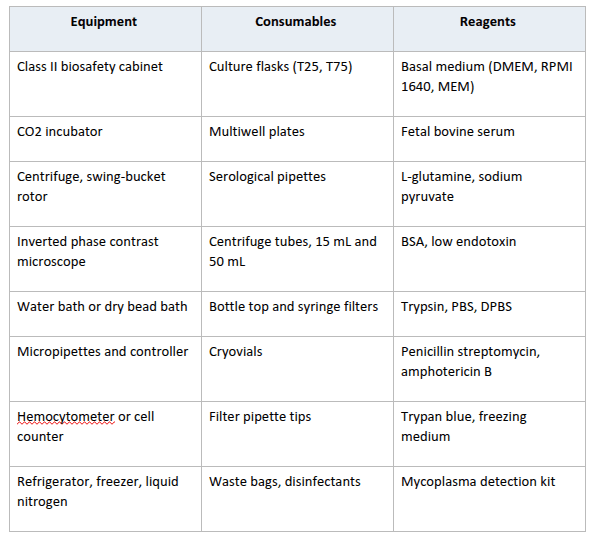
Equipment used in the tissue culture lab creates a controlled environment in which cells can grow without exposure to unwanted microbes. If you’re a researcher, here is the core tissue culture lab equipment checklist you need for your laboratory:
So, what is the best media for mammalian cell lines?
Usually, the best medium for mammalian cell lines depends on the cell type. DMEM, RPMI 1640, MEM, and DMEM/F-12 are all formulated for different cell types, and the medium you choose is crucial to the success of your cultures.
DMEM is the most common starting medium for adherent cells such as HEK293 and fibroblasts; RPMI 1640 is for suspension cultures and immune cells such as lymphocytes and hybridomas; and MEM is for simple adherent lines at low densities.
Here is a comparison of cell culture media types:
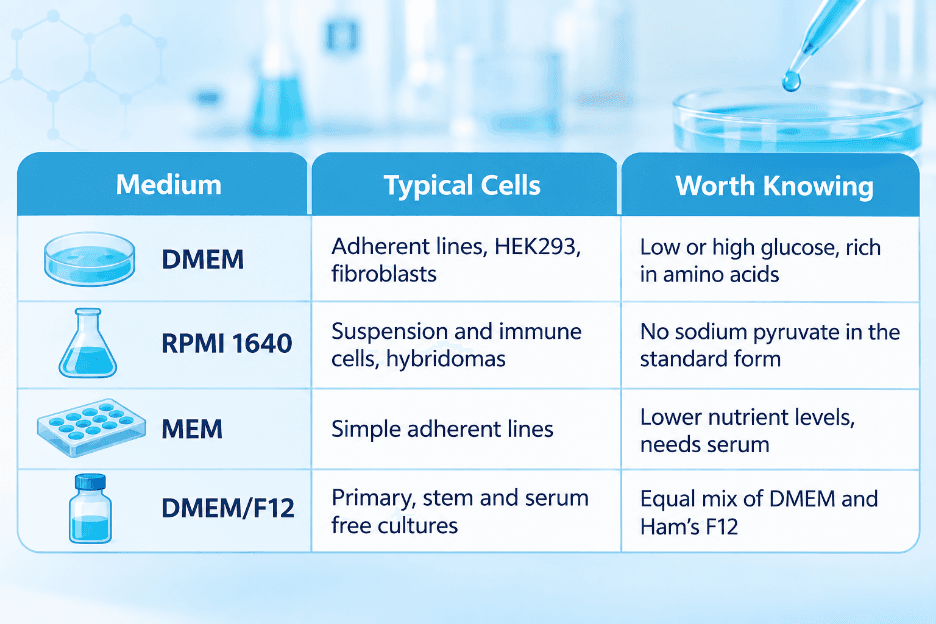
Researchers in Thailand can purchase DMEM from PAN Biotech and Sigma through XL Biotec. Check the product's specifications, sterility information, expiry date, storage requirements, and certificate of analysis (CoA) so you know if the medium will meet your cell culture needs.
PAN Biotech and Sigma media are available in Thailand through XL Biotec, and in the media catalog, liquid and powder versions of each DMEM are listed separately.
Basal media provide the essential nutrients needed for cell growth. Sera and other supplements supply the growth factors, hormones, and attachment proteins that basal media lack.
FBS is a common supply of growth factors, hormones, attachment factors, proteins, and other ingredients for cell growth. It is generally used in mammalian cell culture, although its composition can vary from batch to batch. FBS can be gamma-irradiated or sterile-filtered to meet various research needs.
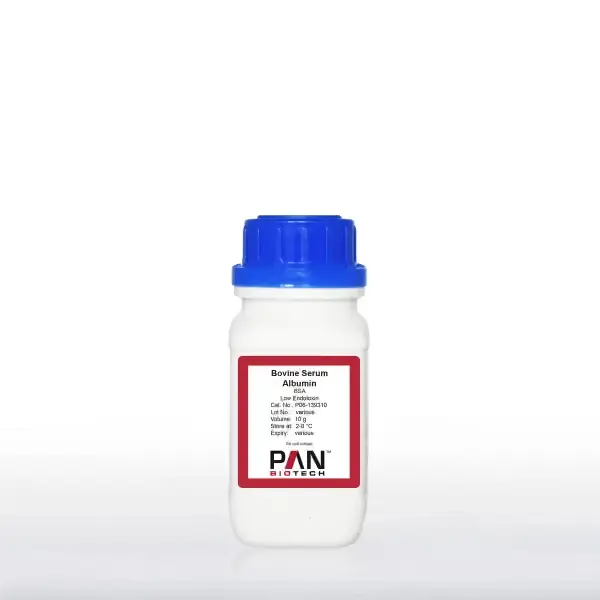
BSA is a protein supplement used in several laboratory applications, including cell culture. It maintains protein stability, reduces nonspecific binding, and is an essential component of selected protein formulations.
Low-endotoxin BSA is most useful for BSA cell culture, experiments involving immune or inflammatory responses, and biological tests sensitive to endotoxins. Endotoxins can cause cells to respond adversely, thereby interfering with experimental results.
A lyophilized Bovine Serum Albumin (BSA) powder with low endotoxin content is suitable for those cultures, and you can purchase it in Thailand from XL Biotec.
L-glutamine supports rapid growth but, in solution, breaks down into ammonia, which slows cells; stabilized forms avoid that. Sodium pyruvate, on the other hand, is a common supplement added to cell culture media to provide an extra carbon and energy source alongside glucose.
In sodium pyruvate cell culture, it can be used to support cell growth and viability in low-serum culture medium. Most DMEMs have this additive, while the ready-to-use RPMI 1640 does not, so be sure to look at the bottle.
Researchers may purchase low-endotoxin BSA from reputable lab reagent suppliers such as Sigma-Aldrich and PAN Biotech. Compare the endotoxin content, purity, and batch number of each product prior to purchase. Labs in Thailand can also buy low-endotoxin BSA through XL Biotec, including BSA powder.
Adherent cells attach to the culture medium during growth. Once the cells have reached a certain confluence level, researchers detach and transfer them into new vessels by passaging.
Main reagents included:
The risk of excessive trypsin exposure during cell culture passage is that it can damage cell-surface proteins, which may, in turn, inhibit cell viability. That is why it’s important to follow the recommended procedure for your specific cell line.
Contamination may introduce bacteria, fungi, and other unwanted microorganisms into the culture. Antibiotics and antimycotics may be added to culture media to control specific microorganisms.
Some common options are:
Although cell culture antibiotics can reduce the potential for contamination, they should not replace adequate aseptic practices. Routine antibiotic use can mask low-level contamination and encourage researchers to overlook poor laboratory practices.
Some antibiotics can also affect cell physiology and experimental results. Only use them when necessary and, whenever indicated, keep bacteria in culture without antibiotics.
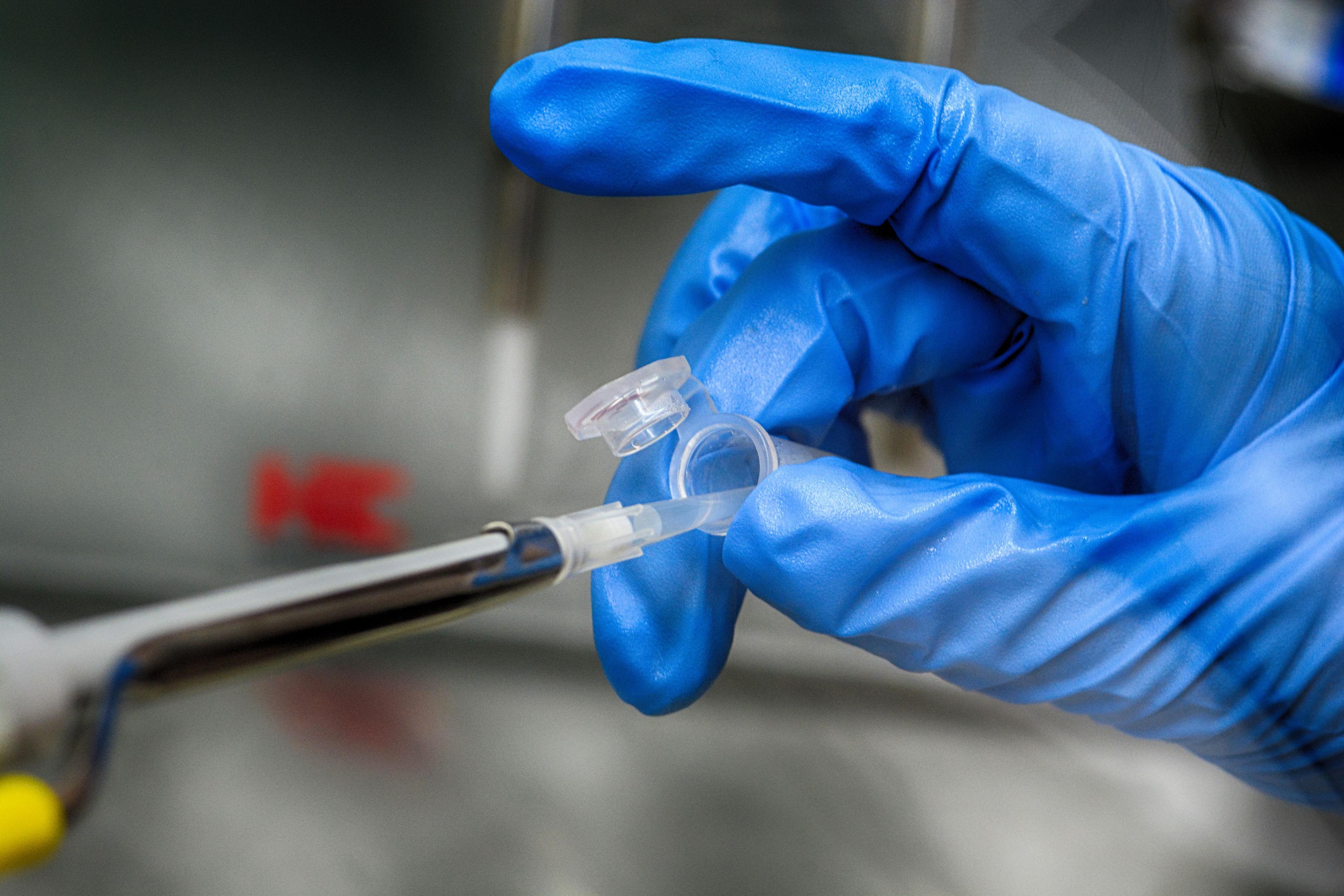
Sometimes, healthy-looking cells are not necessarily contamination-free or suitable for experiments. Quality control tests can confirm that cultured cells are healthy‚ uniform‚ and not contaminated with other species․
Two important QC supplies are:
Test new cell lines before introducing them into established cultures, and establish a routine screening schedule based on laboratory risk and workload to avoid tissue culture contamination. Maintain records of cell identity, passage number, test results, and culture conditions.
Buying tissue culture supplies is more than simply comparing prices. Quality, batch consistency, and storage conditions can also affect research results.
Here is what to consider before placing an order:
Start by selecting the appropriate basal medium for your cell line. Review the formula before adding any of the required additives such as FBS, L-glutamine, or sodium pyruvate. Prepare and mix the medium according to the manufacturer’s instructions.
Researchers purchasing cell culture supplies Thailand may find it easier to obtain product information, check for availability, and arrange delivery with local sales staff. Request a quote on the necessary media, sera, or reagents when ordering several products.
A successful tissue culture experiment comes down to having the right materials and knowing how each supports your research. Start with the equipment, basal media, and supplements required for your chosen cell line, followed by passaging reagents and quality-control supplies.
Download our checklist PDF to tick the boxes or request a bundle quote for media, sera, and reagents from XL Biotec, all in a single order.
You need a class II biosafety cabinet, cell incubator, CO2 incubator, inverted microscope, water bath, a cell counter, freezers, and access to a liquid nitrogen tank.
Tissue culture involves growing tissue fragments or explants in vitro. Cell culture involves growing isolated cells derived from tissue or from a cell line.
Use DMEM as the starting point for adherent lines or RPMI 1640 for suspension and immune cells, and add the MEM when your protocol dictates.
FBS provides growth factors, hormones, and attachment proteins in a single supplement. Its alternatives include reduced serum media, serum-free media, human platelet lysate, and human serum. Cells only need a short adaptation period.
No. Routine use can hide contamination and change cell performance; penicillin-streptomycin should only be used in basic culture and for short-term purposes.
Trypsin breaks down the proteins, which are responsible for keeping adherent cells attached to the dish. This enables the cells to be easily removed for passaging, counting, and reseeding.
Work in a Class II cabinet, wipe surfaces with 70% ethanol, use sterile single-use plastics, have one bottle per cell line, quarantine new cells, and test for mycoplasma as needed.
Adherent cells are passaged every 2-4 days when 70-90% confluence is reached. Suspension cells are diluted to the recommended density. The split ratio is given in cell line data sheets.
Low-endotoxin BSA means that the albumin has very low levels of bacterial lipopolysaccharide (EU/mg). This is important for immune cells, stem cells, and primary cultures.
XL Biotec supplies PAN Biotech media and sera, CLS cell lines, and Sigma reagents to laboratories in Thailand.
