Your list is empty
Add products to request a quote

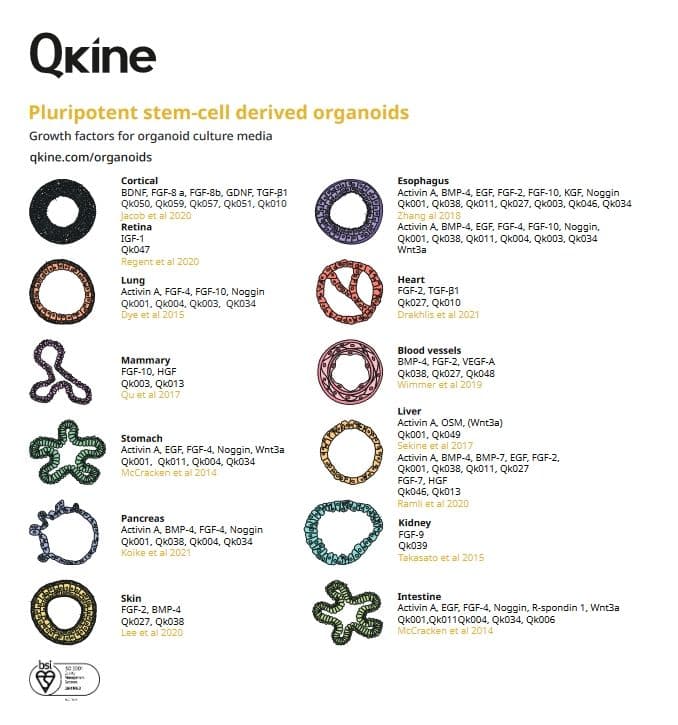
Pluripotent stem cell-derived organoids represent a groundbreaking advancement in the field of biomedical research. These three-dimensional structures, which are grown in vitro from pluripotent stem cells (PSCs), closely mimic the architecture and function of real human organs. This technological innovation holds immense potential for disease modeling, drug discovery, and personalized medicine, offering a more accurate and ethical alternative to traditional animal models.
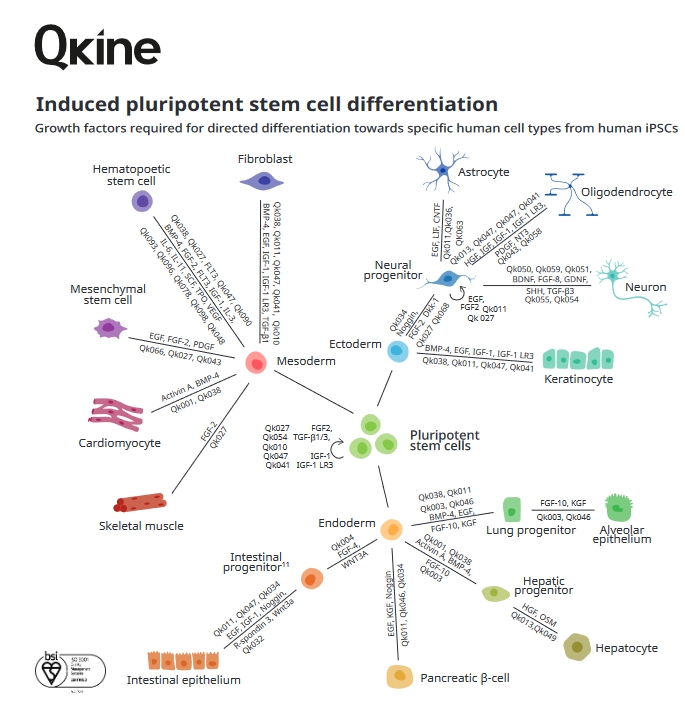
Pluripotent stem cells, including embryonic stem cells (ESCs) and induced pluripotent stem cells (iPSCs), have the remarkable ability to differentiate into any cell type in the human body. ESCs are derived from early-stage embryos, while iPSCs are reprogrammed from adult somatic cells. This unique capability makes PSCs invaluable for generating organoids that resemble various human tissues.
Organoids are miniature, simplified versions of organs produced in vitro from stem cells. They self-organize into three-dimensional structures that replicate key aspects of the organ they represent. These include complex cellular interactions, multicellular architecture, and specific functional properties. Organoids can be derived from several tissue types, including the brain, liver, kidneys, intestines, and lungs.

One of the most significant advantages of PSC-derived organoids is their ability to model human diseases more accurately than traditional animal models. Researchers can generate organoids from iPSCs obtained from patients with specific genetic conditions. This approach allows for the study of disease mechanisms in a relevant cellular context. For example, brain organoids derived from iPSCs of patients with neurological disorders like Alzheimer’s disease or autism can help elucidate the underlying pathophysiology and identify potential therapeutic targets.
Organoids offer a more predictive platform for drug discovery and toxicity testing compared to conventional cell cultures or animal models. Their three-dimensional structure and cellular complexity provide a more realistic environment for evaluating drug efficacy and safety. High-throughput screening of drug candidates can be performed on organoids, enabling the identification of promising compounds with higher translational potential. Additionally, organoids can be used to test the toxicity of new drugs on specific organ systems, reducing the reliance on animal testing and improving patient safety.
Another exciting application of PSC-derived organoids is in personalized medicine. By generating organoids from a patient’s own cells, researchers can create individualized models of disease. This approach allows for the testing of personalized treatment regimens and the identification of the most effective therapies with minimal side effects. For instance, cancer organoids derived from a patient’s tumor can be used to screen for the most effective chemotherapy agents, tailoring treatment plans to the individual’s unique genetic makeup.
The field of organoid research is rapidly evolving, with continuous advancements in stem cell technology and bioengineering. Future directions include the integration of organoids into microfluidic devices to create organ-on-a-chip systems, which can model complex physiological processes and inter-organ interactions. Additionally, efforts are underway to scale up organoid production for large-scale drug screening and regenerative medicine applications.
In conclusion, pluripotent stem cell-derived organoids are revolutionizing biomedical research by providing more accurate and ethical models for studying human diseases and testing new drugs. As this technology continues to advance, it holds great promise for improving our understanding of human biology and transforming the landscape of personalized medicine.