Your list is empty
Add products to request a quote

Adrenocorticotropic hormone, or ACTH, is one of the most important hormones in the way your body responds to stress. ACTH circulates through the bloodstream, triggering the adrenal glands to release cortisol, the hormone your body relies on in stressful situations.
When ACTH gets out of balance, it can cause serious problems such as Cushing’s disease, Addison’s disease, and tumors of the adrenal glands. This is why it is so important to have a reliable and accurate means of testing it.
The quantitative sandwich enzyme-linked immunosorbent assay has emerged as the gold standard of testing methods. This is because it is both sensitive and specific, and most labs can perform it without advanced technology.
Continue reading to understand everything you need to know about performing an ELISA kit to detect human ACTH.
ACTH is a peptide hormone produced and released by the anterior pituitary gland. The hypothalamus regulates the release of this hormone via corticotropin-releasing hormone.
After the release of ACTH into the blood, it acts on receptors in the adrenal cortex to release more cortisol. The entire process, known as the hypothalamus-pituitary-adrenal axis, is at the heart of the body’s response to stress, inflammation, and immune responses.
In research, quantifying ACTH is vital for distinguishing between causes of adrenal insufficiency and hypercortisolism. Researchers studying these diseases rely on a well-validated ELISA kit to generate the precise data their studies demand. In primary adrenal insufficiency, ACTH levels rise because the pituitary gland keeps trying to stimulate an adrenal gland that can no longer respond effectively.
Cushing’s disease has elevated levels of ACTH because of an adenoma in the pituitary gland. These are two very different diseases that require distinct treatments, which are only possible with quantification of ACTH using an effective hormone ELISA kit.
Scientists interested in the biology of stress, HPA axis dysregulation, metabolic syndrome, or psychiatric diseases such as depression or PTSD also heavily rely on ACTH levels to elucidate the alterations in the body’s response to stress under different conditions.
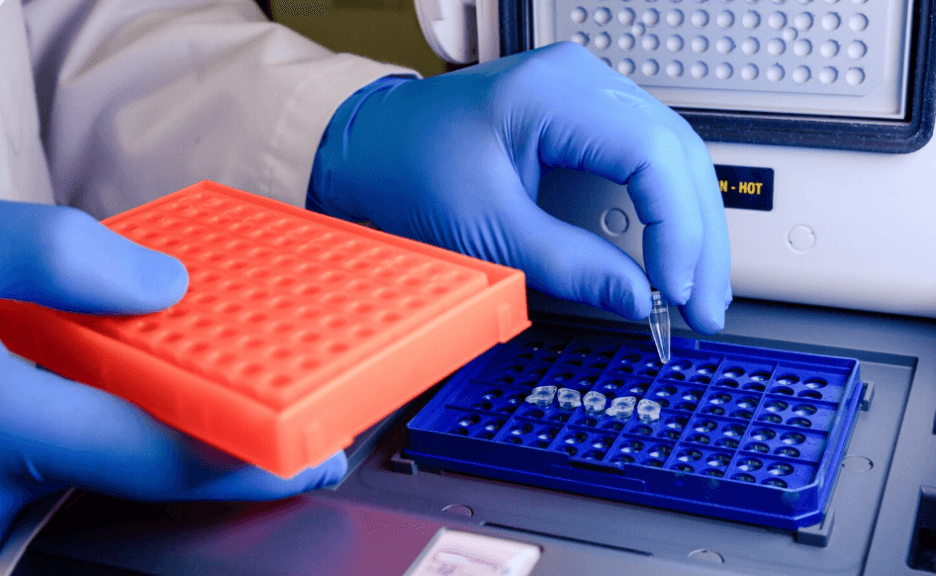
The sandwich ELISA kit gets its name from the mechanism it uses to sandwich the target protein between two antibodies: one fixed to the plate and the other in solution. In the case of ACTH, the process involves a microplate pre-coated with a capture antibody specific for human ACTH. When you add your sample to the well, the ACTH in the sample binds to the capture antibody and is retained despite washing.
A detection antibody then binds to a different part of the ACTH protein, forming the sandwich. This detection antibody has a tag, usually biotin, which then binds to a streptavidin-enzyme conjugate in the next step. The enzyme, typically horseradish peroxidase, catalyzes a reaction with a substrate solution, resulting in a color change. Also, the amount of this color is directly proportional to the amount of ACTH in the original sample.
This assay design makes protein detection ELISA exceptionally reliable for hormone measurement, as the molecule under investigation must possess two distinct binding sites. Such high specificity is not a luxury but a necessity when measuring ACTH, as it may be present at very low levels.
Not all ELISA assay kit available in the market are created equal when it comes to ACTH. Since ACTH has a short half-life and is present at low picomolar concentrations in human plasma, the kit you choose must meet several non-negotiable requirements.
Sensitivity is the first thing you need to check. A high sensitivity ELISA kit for ACTH should detect concentrations as low as 0.1 pg/mL. The range usually varies from 0.5 pg/mL to 300 or 400 pg/mL, depending on the kit.
Specificity is also important. The antibodies used in the kit should have low cross-reactivity with other peptides, such as alpha-MSH or beta-endorphin, which share structural sequences with ACTH. It is always important to check the kit’s datasheet before making a purchase.
Reproducibility is important for any quantitative ELISA. You can look for kits that provide intra-assay and inter-assay coefficients of variation of less than 10 percent. This indicates that the assay results are consistent whether you perform it three times in a day or on different days.
Pre-coated ELISA kits are also time-saving and provide less variability compared to performing assays on different plates. Most commercial kits for ACTH ELISA have the capture antibody pre-coated on the microplate. This removes one of the most difficult steps in immunoassay preparation.

ACTH is notoriously unstable. The peptide will break down quickly at room temperature, and even a brief delay in processing the sample will result in falsely low results. Proper sample handling is as important as selecting the appropriate format for the enzyme-linked immunosorbent assay.
For plasma samples, EDTA tubes are the tube of choice because they will better preserve ACTH than heparin or serum separation techniques. After collection, place your sample on ice immediately and spin it down within 15 minutes. Spin at 4 degrees Celsius, split the plasma into separate tubes, and store at -80 degrees Celsius if you are not performing the assay immediately. Repeated freeze/thaw cycles will further degrade the peptide.
Some ACTH kits also accept urine and cerebrospinal fluid samples, but these matrices often require additional validation steps to confirm accuracy. Always check the kit’s intended sample type before assuming compatibility.
One important thing to remember: ACTH has a strong circadian rhythm, peaking in the early morning and dropping around midnight. If you are doing a study and need accurate ACTH information, make sure you collect your samples at the same time for all subjects.
The process of running a colorimetric ELISA for ACTH involves a logical sequence of steps that becomes easy to follow once you grasp the rationale behind each step.
Here is how a standard ACTH test procedure usually looks.
Begin by allowing all the kit components to reach room temperature, which takes about 30 minutes. Meanwhile, set up your standard curve by diluting the stock standard solution using the diluent supplied with the kit. A standard curve consists of seven or eight points with a two-fold serial dilution, along with a zero-calibrator well.
Add your standards, controls, and samples to the designated wells. The standard procedure requires adding 100 microliters to each well. Seal the plate and incubate it at 37 degrees Celsius for 90 minutes to two hours. During this period, the ACTH in your samples will have bound to the capture antibody.
Remove the liquid from the wells after incubation and wash the plate three to five times with the wash buffer. Each wash step removes any unbound material, thus minimizing background noise. Next, add the detection antibody to each well, reseal the plate, and incubate again.
Repeat the wash step, and then add the streptavidin-HRP conjugate and incubate for another 30 minutes. After the final wash, add the TMB substrate solution. The wells should start turning blue, showing that the enzyme reacts with the substrate. Add your stop solution to end the reaction, which turns the color from blue to yellow, then use a microplate reader to read the absorbance at 450 nanometers.
Finally, you can use your standard curve to convert your absorbance values to ACTH concentrations. Most scientists use four-parameter logistic curve fitting to achieve the best results across the entire range of their immunoassay kit.

Even experienced researchers occasionally encounter problems with Human ELISA kits. However, knowledge of the most common problems will save a lot of time.
High background is one of the most common problems reported. This is most likely due to inadequate washing, the use of expired reagents, or incubation at an incorrect temperature. Double-check your washing technique and empty the plate between each wash step. Adding a small amount of Tween-20 to your wash buffer may help alleviate background problems.
Low signal despite high sample concentrations is most likely due to a sample-preparation issue. ACTH degradation is probably the most common problem. Ensure that your sample preparation is adequate. Adding protease inhibitors to your sample collection tubes may help.
There is also a hook effect, caused by very high ACTH levels, which produces a lower result than expected. If you suspect your samples are at the high end of the range, it is a good idea to dilute them and run them again. Most kits specify the maximum sample concentration to prevent this issue.
Additionally, matrix effects occur when a sample component, such as a lipid, protein, or drug, interferes with antibody binding. Running a spike-and-recovery experiment can help detect matrix effects before a study begins.
The most popular choice for a research laboratory, however, remains the colorimetric format, as it requires only a standard microplate reader and provides quantitative results with very good accuracy. A colorimetric ELISA kit strikes the right balance between cost, sensitivity, and ease of use for most ACTH detection needs in research and clinical settings.
When a very sensitive assay capable of detecting ACTH at sub-picogram levels is required, chemiluminescent formats are available. However, they are generally more expensive and require a luminometer for reading results. Fluorescent methods are a compromise between these two, offering some improvement in sensitivity without the full cost of the chemiluminescent systems.
If you’re working with multiple hormones or proteins and want to measure them all from the same sample, then the multiplex platforms might be the way to go. These cytokine ELISA kits and multiplex sets allow you to measure ACTH, cortisol, CRH, and other HPA axis hormones from the same sample, all in the same well, which is great when you’re working with limited sample volume. However, they are also more technically demanding and require validation for each analyte.
For most standard research applications using human ACTH, the best option available is a high-quality quantitative colorimetric sandwich ELISA.
It is more difficult to obtain consistent, reliable immunoassay kits for hormone studies than it might seem. Not all suppliers store their products properly, and even slight temperature fluctuations during transport can compromise antibody reliability. Scientists who have experienced failed experiments due to unreliable immunoassay supplies know exactly how costly it can be in terms of time and resources.
When searching for suppliers of your Human ELISA Kits and other necessary supplies, it is important to consider suppliers that work directly with manufacturers that have quality control measures in place and maintain local stock to avoid delivery delays. Not only are long delivery windows inconvenient, but they also pose a scientific hazard when using pre-coated ELISA Kits that require stable antibodies to produce accurate results.
Technical support is also more important than many scientists realize before they encounter an issue. Having the ability to access knowledgeable technical support staff who can assist you in troubleshooting a low-signal run or assist you in adjusting sample preparation methods can mean the difference between saving an entire experiment. Whether you need help choosing the appropriate ELISA assay kit for your application or understanding an unusual standard curve, having this resource available in your area makes all the difference. Selecting suppliers who are knowledgeable in both the products and the realities of operating a research laboratory gives your research the strongest possible start.
EDTA plasma is the most recommended sample type for ACTH measurement. Samples should be collected on ice, centrifuged quickly at 4 degrees Celsius, and stored at -80 degrees Celsius if not tested immediately. Serum is generally unsuitable because ACTH degrades during clotting.
Most researchers need a kit that detects ACTH at concentrations as low as 0.5-1 pg/mL. Normal morning plasma ACTH levels in healthy adults typically range from 10 to 60 pg/mL.
Not reliably. Human ELISA kits use antibodies developed specifically against human ACTH sequences.
Flat or low signals usually point to reagent degradation, incorrect reconstitution of the standard, or a problem with the substrate incubation step.
To detect human ACTH, you need to be precise at every step, from sample acquisition to data interpretation. The quantitative sandwich ELISA technique provides this precision when you use a highly validated kit, properly manage your samples, and closely follow the procedure.
Knowledge of the biology of ACTH, the workings of the assay, and the typical pitfalls that scientists face when working with this technique will place you in a much better position to produce data that you can trust and rely on.
Whether you are researching stress physiology, adrenal disease, or HPA axis problems, a good ELISA kit is the key to unlocking everything else.
