Your list is empty
Add products to request a quote

Key Takeaways:
The ELISA kit is one of the most revolutionary inventions in biomedical laboratory research. Co-developed in 1971 by two independent research teams, ELISA quickly rose to become the gold standard for detecting and quantifying specific biological molecules. This screening methodology notably replaced hazardous radioactive techniques with safer and more cost-effective tests.
Yet, despite their remarkable accuracy scores, ELISA kits don’t always produce identical results. Several parameters can vary the outcomes, underscoring the significance of selecting the right kit for your research program.
We’ve prepared a comprehensive guide to what constitutes the perfect ELISA kit. The post shall also settle some frequently asked ELISA-related questions, so you can hunker down on the best kit for your upcoming laboratory research experiment.
Table of Contents:
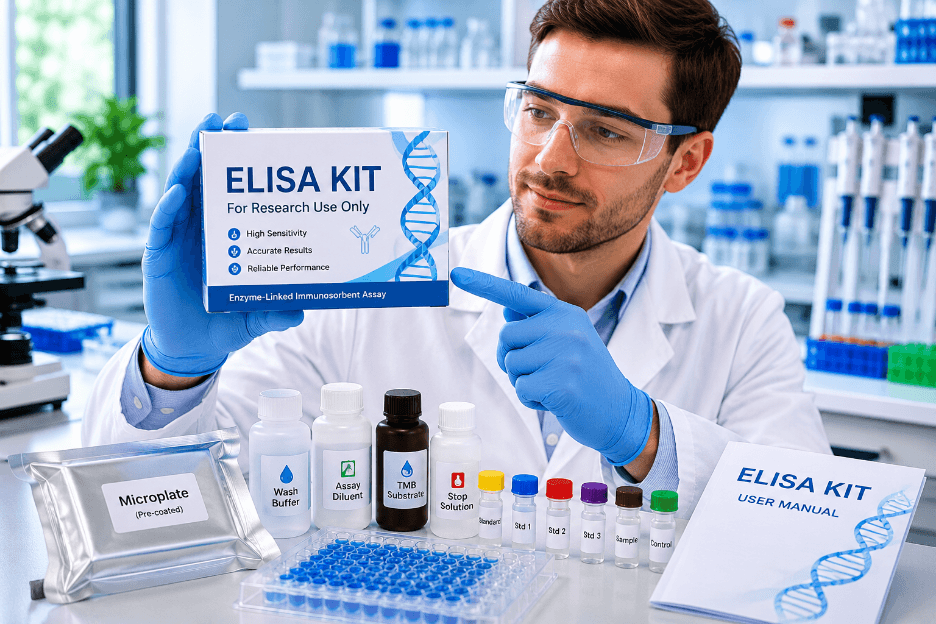
ELISA stands for Enzyme-Linked Immunosorbent Assay, a laboratory technique widely utilized for detecting and quantifying specific biological substances.
Most ELISA kits test for antigens, antibodies, hormones, and proteins in the following bodily fluids;
The ELISA was co-invented in 1971 by two independent research groups - a Sweden-based team led by Eva Engvall and Peter Perlmann, and a Netherlands-based team comprising Anton Schuurs and Bauke van Weemen.
Widely celebrated for its exceptional reliability, the ELISA kit quantifies the concentration of biological molecules using target-specific antibodies and enzyme-linked color changes.
Before ELISA, biomedical researchers relied primarily on Radioimmunoassay (RIA) for analyzing biological samples.
However, RIA screening techniques posed inherent risks to both scientists and their study subjects. The quest for safer testing methodologies eventually led to the development of ELISA kits.
Besides replacing the hazardous radioactive tests, ELISA kits also stand out for being;
Because of its outstanding benefits over alternative biomedical testing methods, the ELISA kit is presently the gold standard for analyzing the volume of proteins, hormones, antigens, and antibodies in liquid biological samples.
Key applications include;
1. Medical Diagnostics
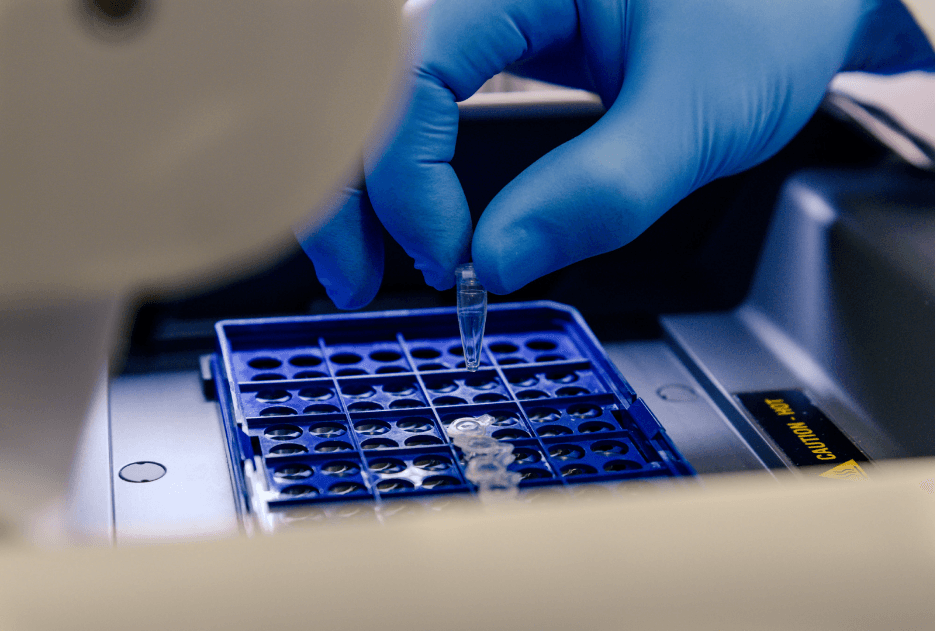
Researchers rely on ELISA kits to screen for highly infectious diseases, including HIV and COVID-19.
The technology has also revolutionized the diagnosis of allergic reactions and certain autoimmune disorders.
Hormonal imbalance is a leading cause of autoimmune disorders.
By deploying ELISA, laboratory technicians can detect hormonal fluctuations with incredible accuracy. The screening technique has proven successful in quantifying;
Beyond medical laboratories, the ELISA kit has also transformed biotechnology and forensic research.
Many scientists deploy this groundbreaking technology to detect certain metabolites in the bloodstream for evidence during anti-doping screenings or criminal investigations.
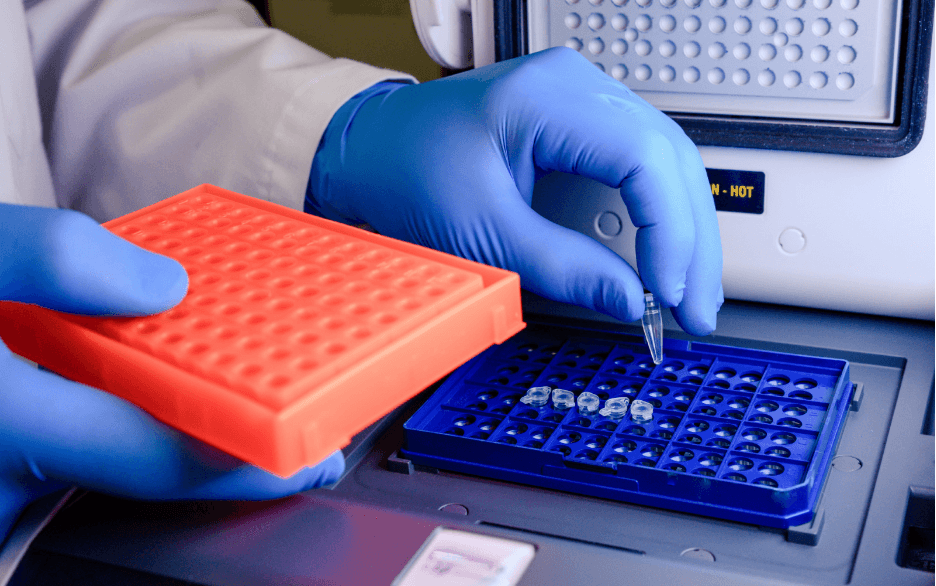
While ELISA tests require some learning curve, the screening technique is considerably easier to master. Here’s a quick ELISA protocol to get you started;
No two ELISA kits are identical. To select the right tool for your research, consider the following aspects;
The success of an ELISA kit relies heavily on the amount of the target antigen.
If the concentration is too low, choose a kit with a high sensitivity threshold and a low LOD (Limit of Detection). For extremely low targets, consider replacing colorimetric detection methods with chemiluminescent or fluorescent ones.
Conversely, select an ELISA reagent with a narrower range if you’re testing high target concentrations. This eliminates the need for serial dilutions to bring the sample within your kit’s readable range and prevent signal saturation.
2. Target Specificity and Cross-reactivity
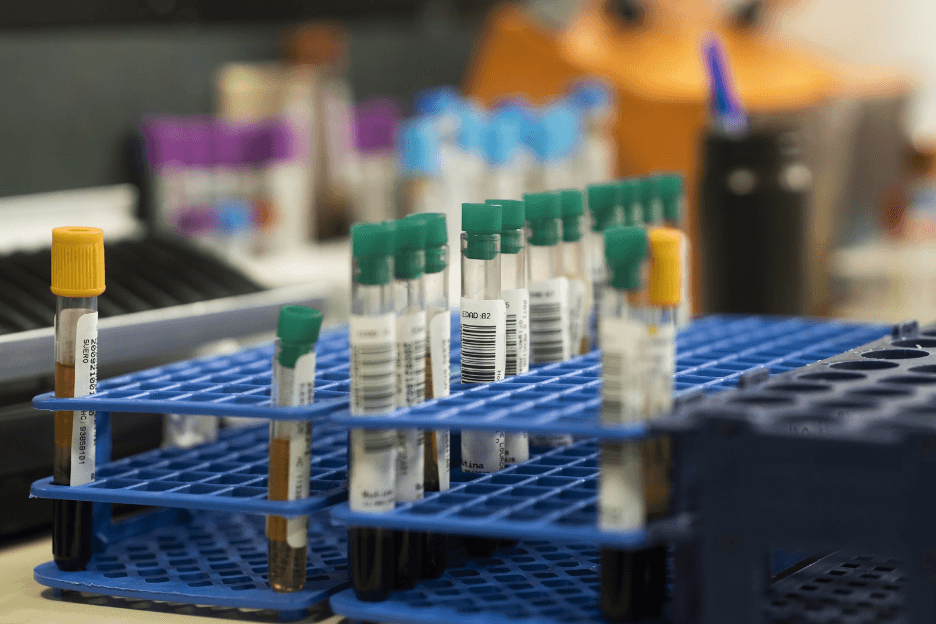
In ELISA tests, target specificity denotes a kit’s ability to precisely identify and attach to the target molecule with minimal interference. Note that a biological sample can contain varying concentrations of different compounds besides the molecule of interest.
To conduct a successful ELISA test, select a kit designed exclusively to detect your target analyte. It minimizes false positives caused when an ELISA cross-reacts with similar isoforms in a complex sample.
Before selecting an ELISA kit, carefully cross-examine a manufacturer’s validation data on target specificity. This is particularly important when screening for analytes with near-similar molecular structures or binding sites.
ELISA kits utilize four different assay formats, namely;
In Direct Elisa, the target antigen gets immobilized on the plate to make it readily detectable by an enzyme-linked primary antibody. Choosing proper antibodies is crucial to the success of a Direct ELISA.
Direct ELISA kits require shorter incubation and fewer wash steps, making them ideal for rapid screening. Other core benefits include;
An Indirect ELISA follows the same fundamental principle as a direct ELISA. However, it utilizes an enzyme-linked secondary antibody to detect an unlabeled primary antibody.
The two distinct antibodies engulf the target antigen, maximizing the test’s accuracy. Ideal use cases include;
Considered the most sensitive and specific ELISA format, Sandwich ELISA is any ELISA test where specific antibodies engulf the target antigens.
Prioritize a sandwich ELISA kit if you’re screening low-abundance analytes.
Competitive ELISAs quantify analytes in samples by comparing how the target antigen and a reference antigen compete for antibody binding sites. It’s ideal for complex experiments or for targets that are too tiny to be sandwiched by two antibodies simultaneously.
Common applications of Competitive ELISA formats include;
NOTE: Always review a format’s suitability before adopting it for your experiment.
You can deploy an ELISA kit with several biological fluids, including;
Serum and plasma are the most common sample types used with ELISA kits. They’re loaded with antibodies and proteins, making them suitable for antibody detection.
Sample XL Biotec /categories-antibodies and select products designed for your specific serum.
Because serum and plasma samples are notably high in proteins, they pose high risks of cross-reactivity. You can reduce non-specific binding by using a sandwich ELISA kit, which minimizes background noise by engulfing the target antigens.
Blood samples contain potentially light-blocking cells, rendering them challenging to use in Direct ELISA experiments.
To conduct an accurate ELISA test with blood samples, you must incorporate a centrifugation step. Centrifugation reduces error rates by separating plasma from other cellular components.
You can also use ELISA kits with fluids extracted from cultured cells or lysed tissues. While these samples are highly concentrated, they’re often complex mixtures of different cellular components.
Using a Sandwich ELISA immunoassay kit is the most reliable way to detect the target analytes in cell culture supernatants.
Some ELISA researchers prefer urine, saliva, and tear samples due to their non-invasiveness.
However, these fluids are extremely low in antigens and require highly sensitive assays to detect the target analytes.
5. Maximum Shelf Life
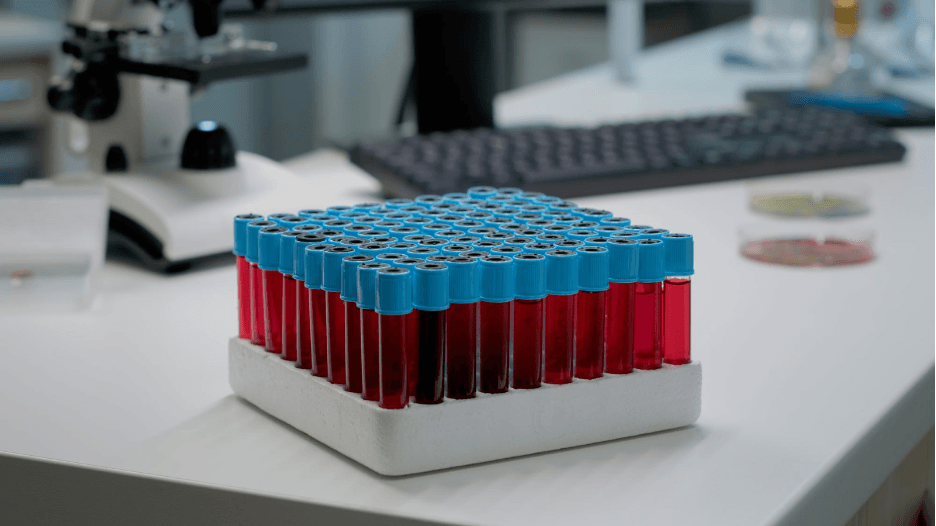
Most ELISA kits can last anywhere from 6 to 12 months. However, the actual duration depends on a kit’s design, storage conditions, and whether it’s opened or unopened.
According to findings, exposing ELISA kits to warmer temperatures reduces their efficacy.
Store unopened ELISA kits within a temperature range of 35.6oF to 46.4oF (2oC to 8oC). However, delicate components like detection antibodies may require consistent freezing at -4OF.
For optimal moisture control, utilize desiccant packets.
ELISA kits aren’t made equal. Although the testing methodology follows the same fundamental principle, the outcome depends on how a kit is validated for diverse sample types.
Even if two ELISA kits follow identical instructions, they will still yield starkly distinct results depending on their blocking agents and the optimization of antibody pairs. Not to mention manufacturer-related factors like kit design and material quality.
Therefore, you must proceed cautiously while selecting the right kit for your laboratory research program.
Contact us today for a premium ELISA kit and boost the credibility of your next biomedical laboratory research program!
An Enzyme-Linked Immunosorbent Assay kit is a standardized laboratory technique used for detecting and quantifying specific biological molecules for biomedical research.
There are four distinct ELISA kit formats, including Direct, Indirect, Sandwich, and Competitive.
Direct ELISA kits immobilize an antigen on the plate to make it readily detectable by an enzyme-linked primary antibody. An indirect ELISA kit immobilizes an antigen on the plate similarly to Direct ELISA, except it utilizes an enzyme-linked secondary antibody to detect an unlabeled primary antibody.
Meanwhile, Sandwich ELISA utilizes two antibodies that bind to the target antigen. Lastly, Competitive ELISA quantifies analytes by analyzing how a sample antigen and a labeled reference antigen compete for limited antibody binding sites.
A Sandwich ELISA test typically unfoldsas follows;
To choose the perfect ELISA kit, consider the target concentration, target specificity, and assay format suitability.
To optimize ELISA’s performance, store your kit at a temperature of 2 - 8°C and preferably in desiccant packets.
With proper storage, most ELISA kits can last 6 - 12 months from the date of manufacture.
Yes. You can use an ELISA kit for both human and animal samples, provided that you verify cross-reactivity beforehand.
High background signal in an ELISA assay commonly results from non-specific binding. Other potential causes include incomplete elimination of unbounded molecules and reagent contamination.
To validate an ELISA kit, titrate a small subset of differently diluted samples. The outcomes must fall within the linear portion of an ELISA standard curve.
A quantitative ELISA kit measures the volume of the target molecule, while a qualitative kit simply detects the molecule’s presence.
